
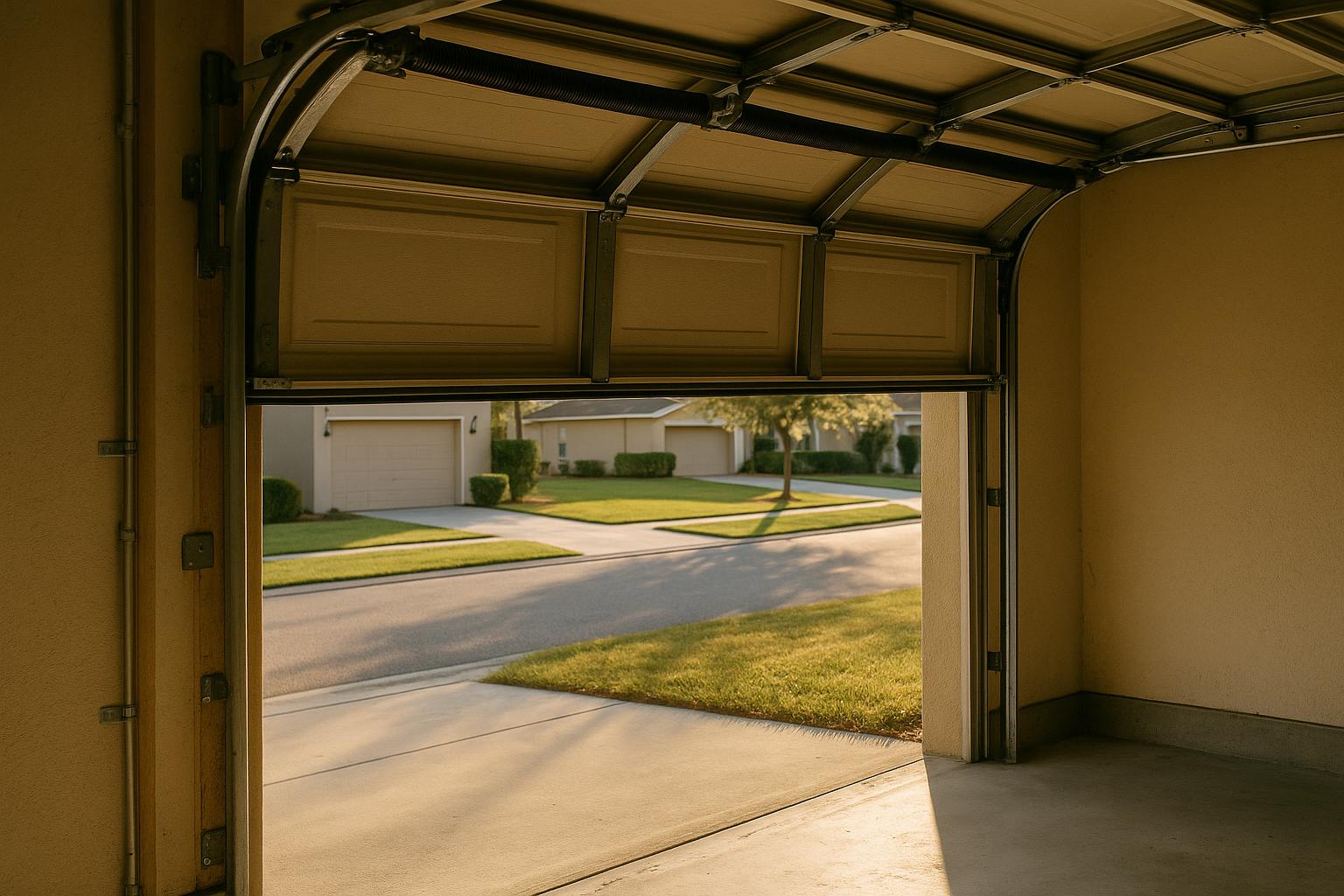
That Grinding, Squealing, or Banging Isn't Normal
If your garage door has started sounding like a freight train every time it opens or closes, you're not alone. Noisy garage doors are one of the most common complaints we hear from homeowners in Lutz, and for good reason — the sound can rattle windows, wake up sleeping family members, and make you dread pulling into your own driveway.
The good news is that a loud garage door is usually fixable. The bad news is that ignoring the noise often leads to bigger, more expensive problems down the road. In this post, we'll walk through the most common causes of a noisy garage door and explain what you can do about each one.
1. Worn or Dry Rollers
Garage door rollers are small wheels that guide the door along the vertical tracks on either side of the opening. Over time, these rollers wear down, develop flat spots, or lose their lubrication. When that happens, you'll hear a grinding or squealing sound every time the door moves.
Metal vs. Nylon Rollers
If your door uses standard steel rollers, they're naturally louder than nylon alternatives — even when they're in good shape. Upgrading to nylon rollers is one of the most effective ways to reduce garage door noise. Nylon rollers don't require lubrication, they're quieter during operation, and they tend to last longer than their metal counterparts.
What you can do: If your steel rollers are still in decent condition, applying a garage-door-specific lubricant can help temporarily. For a long-term fix, consider having a professional replace them with high-quality nylon rollers.
2. Loose Hardware
Your garage door goes up and down hundreds of times a year. All that movement creates vibration, and vibration loosens nuts, bolts, and brackets over time. Loose hardware is one of the simplest causes of a rattling or vibrating garage door, and it's also one of the easiest to address.
What you can do: Using a socket wrench, carefully tighten all the bolts on the door's hinges, brackets, and track supports. Be careful not to overtighten — you can strip the holes or warp the hardware. If you notice any bolts that are missing or damaged, replace them promptly.
3. Worn or Unbalanced Springs
The torsion or extension springs on your garage door bear an enormous amount of tension. They're responsible for counterbalancing the weight of the door so it opens and closes smoothly. When springs start to wear out, they can produce loud popping, creaking, or banging sounds.
An unbalanced door — one where the springs aren't distributing weight evenly — can also cause the opener to work harder than it should, adding motor strain noise to the mix.
What you can do: Spring work is dangerous and should always be handled by a trained technician. If you suspect your springs are the source of the noise, call a professional for an inspection. Here in Lutz, we see spring-related noise issues frequently, especially in homes where the original springs have never been replaced.
4. A Struggling Garage Door Opener
Older chain-drive garage door openers are notorious for being loud. The metal chain that drives the trolley along the rail creates a distinct rattling and clanking sound that echoes through the garage and into the rooms above it.
Chain-Drive vs. Belt-Drive Openers
If your opener uses a chain drive and the noise has always been an issue, upgrading to a belt-drive opener can make a dramatic difference. Belt-drive systems use a reinforced rubber belt instead of a metal chain, resulting in significantly quieter operation. This is especially worth considering if you have living space above or adjacent to your garage.
What you can do: If your chain-drive opener is relatively new, lubricating the chain and tightening the rail connections may reduce some noise. If the opener is more than 10 to 15 years old, a replacement with a modern belt-drive unit is usually the smarter investment.
5. Lack of Lubrication
Many homeowners don't realize that garage doors need regular lubrication to operate quietly. The hinges, springs, rollers, and bearing plates all benefit from periodic application of a proper lubricant. Without it, metal-on-metal contact creates friction, heat, and — you guessed it — noise.
What you can do: Use a lithium-based grease or a silicone spray designed specifically for garage doors. Apply it to the hinges, roller bearings, springs, and the track where the rollers make contact. Avoid using WD-40 as a long-term lubricant — it's a solvent that can actually strip away existing grease and leave parts drier than before.
6. Damaged or Misaligned Tracks
If your garage door tracks have been dented, bent, or have shifted out of alignment, the rollers won't glide smoothly. This can produce scraping, grinding, or popping sounds. In some cases, you may also notice the door hesitating or jerking during operation.
What you can do: Visually inspect the tracks for obvious dents or gaps between the track and the rollers. Minor debris can sometimes be cleared with a damp cloth. However, bending tracks back into shape or realigning them is a job best left to a professional to avoid creating further damage or a safety hazard.
7. Vibration Transfer to the Ceiling and Walls
Sometimes the garage door and opener are functioning fine mechanically, but the vibration from normal operation is transferring into the structure of your home. This is common in Lutz homes where the garage is attached to the main living area, and it can make the noise seem louder than it actually is.
What you can do: Anti-vibration pads or isolation mounts can be installed between the opener and the ceiling bracket. These inexpensive accessories absorb vibration before it reaches your home's framing, noticeably reducing the sound that travels into bedrooms and living spaces.
When to Call a Professional
Some of the fixes above — like lubricating hinges or tightening bolts — are safe for most homeowners to handle. But others, particularly anything involving springs, cables, or track realignment, carry real safety risks. Garage door components are under extreme tension, and improper handling can result in serious injury.
If you've tried the basic maintenance steps and your door is still making excessive noise, it's time to have a technician take a closer look. There may be an underlying issue — like a failing spring or a worn-out opener gear — that isn't visible during a surface-level inspection.
Keep Your Garage Door Quiet and Reliable
A noisy garage door is your home's way of telling you something needs attention. Whether it's a simple lubrication issue or a sign that key components are wearing out, addressing the problem early saves you money and prevents more disruptive breakdowns later.
At Lutz Garage Door Service, we help homeowners across Lutz, Land O' Lakes, Wesley Chapel, and surrounding communities diagnose and fix noisy garage doors every week. Whether you need a tune-up, new rollers, or a complete opener replacement, we'll get your door running smoothly and quietly again. Give us a call to schedule an inspection — your mornings (and your neighbors) will thank you.