
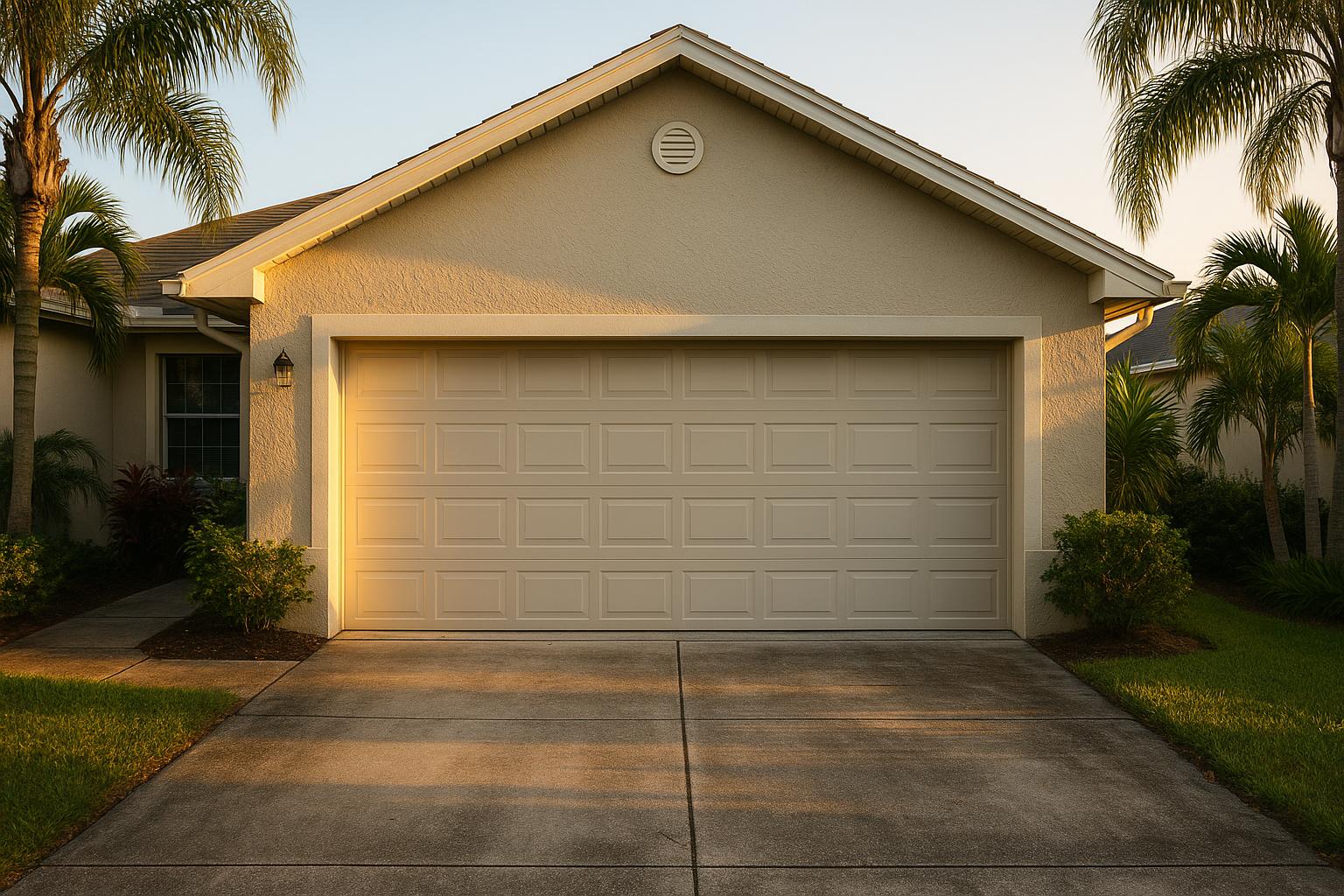
Stuck in the Garage? You're Not Alone
It's 7:15 a.m. You've got your coffee, your keys, and exactly enough time to make it to work. You press the garage door opener button and… nothing. Or maybe the door lurches up a few inches and stops. Or it makes a grinding sound that tells you something is very wrong.
For homeowners in Lutz and surrounding communities, a garage door that won't open in the morning is one of the most common — and most stressful — service calls we receive. The good news is that most causes are identifiable and fixable, often the same day. Let's walk through the most likely culprits and what you can do about each one.
1. Dead or Weak Remote Batteries
It sounds almost too simple, but this is the number one reason people think their garage door is broken when it isn't. Remote control batteries typically last one to two years, and they don't always give you a warning before they die.
What to try: Replace the batteries in your remote with fresh ones. If you have a wall-mounted button inside the garage, try pressing that instead. If the wall button works but the remote doesn't, you've found your answer.
2. The Opener Has Lost Power
Power outages overnight, tripped breakers, and accidentally unplugged units are more common than you'd think. Florida's summer storms can knock out power briefly during the night without you ever realizing it, and sometimes that's enough to trip a breaker or reset a GFCI outlet.
What to try: Check that the opener unit is plugged in and that the outlet has power. Test the outlet with another device like a phone charger. Check your electrical panel for tripped breakers, and reset any GFCI outlets in the garage by pressing the reset button.
3. The Safety Sensors Are Blocked or Misaligned
Modern garage doors have photo-eye sensors near the bottom of the door tracks on each side. These sensors prevent the door from closing on a person, pet, or object. But when they get bumped, dirty, or misaligned, they can also prevent the door from operating correctly — sometimes even from opening.
What to try: Look at the small LED lights on each sensor. Both should be lit and steady. If one is blinking or off, gently clean the lens with a soft cloth and make sure nothing is blocking the beam between the two sensors. Carefully adjust the sensor so it points directly at its partner on the opposite side.
4. The Door Is Locked — Manually
Many garage doors have a manual lock built into the door itself, separate from the opener system. If someone accidentally engaged this lock, the opener motor will try to lift the door but won't be able to. You might hear the motor straining or see the door shudder without moving.
What to try: Look for a lock handle or latch on the inside of the garage door. If it's been turned to the locked position, simply unlock it and try the opener again. Running the opener repeatedly against a locked door can damage the motor and the lock mechanism, so address this quickly.
5. Broken Torsion or Extension Springs
This is the one you don't want to hear, but it's extremely common. Garage door springs bear the full weight of the door and are under tremendous tension. When a spring breaks — and they do break, usually after 7,000 to 10,000 cycles — the door becomes far too heavy for the opener to lift on its own.
Signs of a broken spring:
- A loud bang from the garage, sometimes heard the night before
- A visible gap in one of the springs mounted above the door
- The door feels extremely heavy when you try to lift it manually
- The opener motor runs but the door barely moves or doesn't move at all
What to do: Do not attempt to replace garage door springs yourself. These components are under extreme tension and can cause serious injury. This is a job for a trained technician. If you're in Lutz, Land O' Lakes, Wesley Chapel, or nearby areas, give us a call and we can typically get to you the same day.
6. The Disconnect Switch Was Engaged
Every garage door opener has an emergency release cord — usually a red handle hanging from the opener rail. If this cord was pulled, the door is disconnected from the opener and will only move manually. This is a feature designed for power outages, but it's easy to pull accidentally.
What to try: Pull the release cord back toward the opener (toward the motor unit) and then try operating the door with the remote or wall button. The trolley should re-engage with the opener chain or belt, and normal operation should resume.
7. Worn Gears or a Failing Opener Motor
If your garage door opener is more than 10 to 15 years old, internal wear can eventually catch up with it. Stripped gears are a common failure point, especially in older chain-drive models. You'll hear the motor running, but the door won't move because the gears inside the motor housing are no longer engaging.
What to do: Gear replacement is possible in many cases and is significantly cheaper than replacing the entire opener. However, if the motor itself is failing or the unit is outdated, upgrading to a newer, quieter model with modern safety and smart-home features may be the better investment. A technician can help you weigh the options.
8. Temperature and Humidity Effects
Here in Lutz, our climate can play a role in garage door performance. High humidity can cause wooden doors to swell and metal components to corrode. On cooler mornings — yes, Florida does have them — lubricant on the tracks and rollers can thicken, making the door harder to move. These issues tend to build gradually and show up as sluggish operation before a full failure.
What to try: Apply a silicone-based garage door lubricant to the tracks, rollers, hinges, and springs. Avoid using WD-40 as a long-term lubricant — it's a solvent that can actually strip away the grease your door needs. Regular maintenance, ideally once or twice a year, keeps these climate-related issues from turning into breakdowns.
When to Call a Professional
Some of the fixes above are safe and simple enough to handle on your own. But if you're dealing with broken springs, a failing motor, structural damage to the door, or any situation where the door feels unsafe, it's time to call in a professional.
At Lutz Garage Door Service, we handle these exact situations every day for homeowners across Lutz, Carrollwood, Citrus Park, Odessa, and the surrounding area. We show up on time, diagnose the problem honestly, and get your door working so you can get on with your day.
If your garage door left you stranded this morning — or if it's been acting up and you want to prevent that scenario — contact us today to schedule a service call or ask about our maintenance plans.