
Your Garage Door Springs Are Working Harder Than You Think
Every time you open or close your garage door, the springs are doing the heavy lifting — literally. A standard two-car garage door can weigh between 150 and 250 pounds, and the springs are responsible for counterbalancing all of that weight. Over time, the metal fatigues, and those springs will eventually fail.
For homeowners in Lutz, where the garage often serves as the primary entry point to the home, a broken spring can bring your entire morning routine to a halt. Understanding the lifespan of your garage door springs — and knowing when to replace them before they snap — can save you from unexpected headaches, costly emergency repairs, and potential safety hazards.
How Long Do Garage Door Springs Typically Last?
Most standard garage door springs are rated for approximately 10,000 cycles. One cycle equals one full open and one full close. If your household opens and closes the garage door four times a day, that works out to roughly seven to nine years of use before the springs reach the end of their expected lifespan.
However, several factors can shorten or extend that timeline:
- Frequency of use: Families with multiple drivers or those who use the garage as a workshop or storage area may cycle the door six to eight times daily, cutting the spring life down to five or six years.
- Spring quality: Not all springs are created equal. Higher-grade springs rated for 20,000 or even 30,000 cycles are available and can last significantly longer.
- Climate and humidity: Here in central Florida, the warm, humid conditions can accelerate rust and corrosion on metal components, weakening springs faster than in drier climates.
- Maintenance habits: Springs that are regularly lubricated and inspected tend to outlast neglected ones by a noticeable margin.
Torsion Springs vs. Extension Springs: What's the Difference?
There are two main types of garage door springs, and knowing which type you have can help you understand replacement timelines and costs.
Torsion Springs
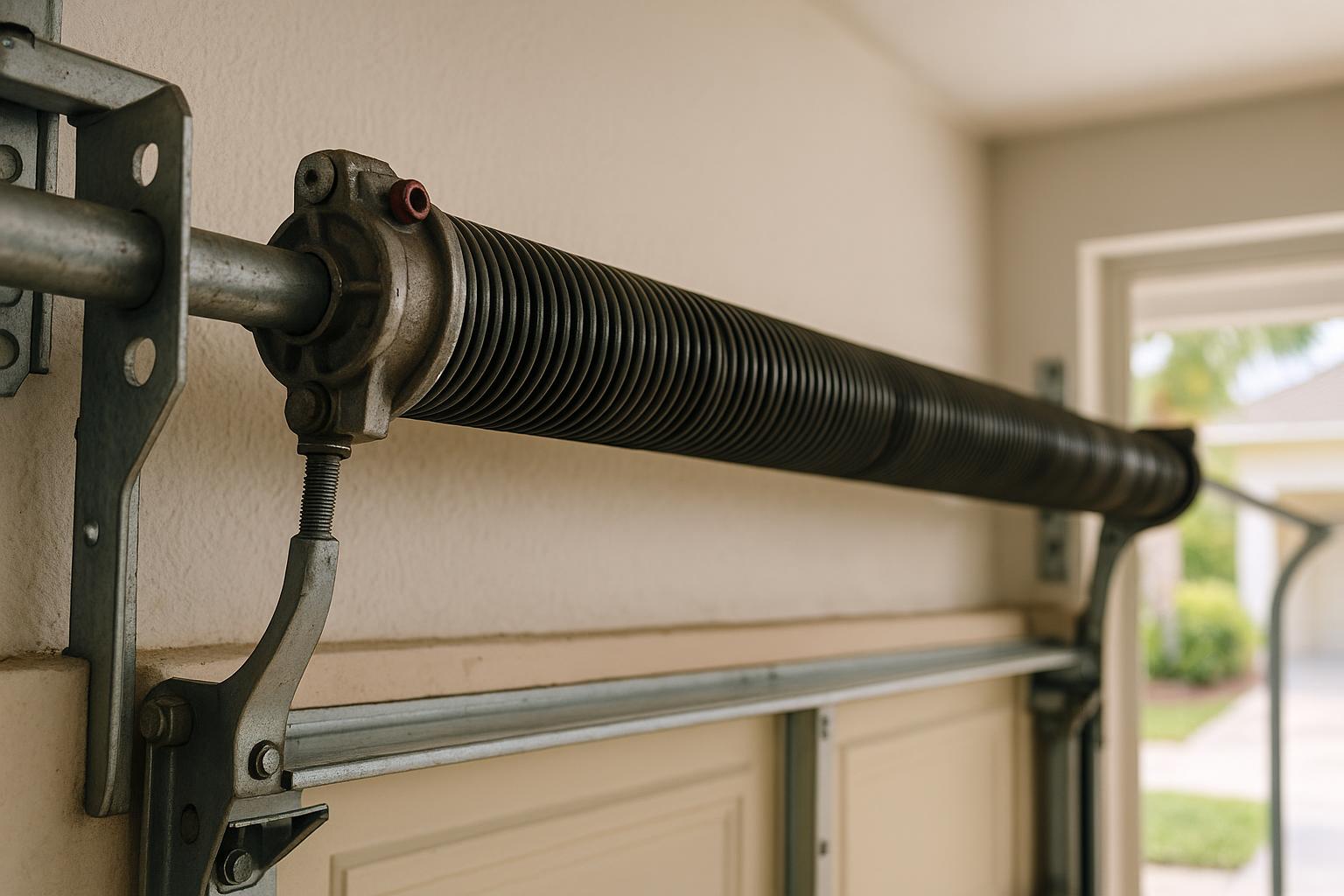
Torsion springs are mounted horizontally above the garage door opening. They use torque to lift the door and are generally considered the more durable and safer option. Most modern garage doors in Lutz neighborhoods — from newer builds in Wesley Chapel to established homes in Carrollwood — use torsion spring systems.
Extension Springs
Extension springs run along the horizontal tracks on either side of the door. They stretch and contract to provide lifting force. These are more common on older or lighter garage doors and tend to wear out faster. They also pose a greater safety risk when they break, which is why safety cables should always be installed alongside them.
If you're unsure which type your garage door uses, a quick visual inspection of the hardware above and beside the door will usually tell you. Or you can have a professional take a look during a routine maintenance visit.
Warning Signs Your Springs Are Wearing Out
Springs rarely fail without giving some advance notice. Here are the most common signs that your garage door springs are nearing the end of their life:
- The door feels heavier than usual: If you disconnect the opener and try to lift the door manually, it should move relatively easily. A door that feels extremely heavy suggests the springs are losing tension.
- The door doesn't stay open: A properly balanced garage door should stay in place when opened halfway. If it slides down, the springs may be weakening.
- Visible gaps or stretching: On torsion springs, look for a visible gap in the coil. On extension springs, look for elongation or uneven stretching.
- Rust and corrosion: Given the humidity we deal with in the Lutz area, rust is a common issue. Corroded springs are brittle springs, and brittle springs break.
- The opener is straining: If your garage door opener seems to be working harder, running louder, or stopping mid-cycle, worn springs could be forcing it to compensate for the lost counterbalance.
Can You Replace Garage Door Springs Yourself?
This is one of the most common questions we hear, and the answer is straightforward: we strongly advise against it. Garage door springs are under extreme tension. A torsion spring that snaps or is improperly handled during replacement can cause serious injury or even death.
Professional technicians have the specialized tools, training, and experience to replace springs safely. They can also assess whether your current spring type and size are appropriate for your door's weight, which is critical for proper balance and long-term performance.
Attempting a DIY spring replacement to save money can easily result in damage to the door, the opener, or — most importantly — yourself. This is one repair that's always worth leaving to the professionals.
Should You Replace Both Springs at the Same Time?
If your garage door uses two springs — which most double-car doors do — we almost always recommend replacing both at the same time, even if only one has broken. Here's why:
- Matched wear: If one spring has failed, the other is likely close behind. It has endured the same number of cycles and the same environmental conditions.
- Balanced operation: Mismatched springs — one new and one worn — can cause the door to open unevenly, putting stress on the tracks, cables, and opener.
- Cost efficiency: The labor involved in a spring replacement is the bulk of the cost. Replacing both during the same service call saves you from paying for a second visit in a few months.
How Regular Maintenance Extends Spring Life
One of the simplest things you can do to get the most out of your garage door springs is to keep up with basic maintenance. A little attention goes a long way:
- Lubricate the springs: Apply a silicone-based or white lithium grease lubricant to the springs every three to four months. This reduces friction, prevents rust, and helps the coils move smoothly.
- Schedule annual inspections: A professional maintenance visit once a year allows a technician to check spring tension, look for signs of wear, and catch small issues before they become big problems.
- Keep the door balanced: If you notice any changes in how the door operates — jerky movement, uneven lifting, or unusual resistance — have it checked promptly. An unbalanced door puts extra strain on the springs.
For homeowners across Lutz, Land O' Lakes, Odessa, and Citrus Park, scheduling a maintenance visit before Florida's storm season is an especially smart move. High winds and pressure changes can stress garage door components, and you want everything in top shape when severe weather rolls through.
Don't Wait for the Snap
A broken garage door spring is one of the most common emergency calls we receive at Lutz Garage Door Service. And while we're always happy to help in an emergency, we'd rather help you avoid one altogether. If your springs are approaching the seven-year mark, if you're noticing any of the warning signs listed above, or if you simply can't remember the last time your garage door had a professional once-over, now is the time to act.
Getting ahead of a spring failure means you get to choose when the repair happens — on your schedule, not at 7 a.m. when you're trying to get to work and the door won't budge. Reach out to our team to schedule an inspection or spring replacement, and keep your garage door running safely and reliably for years to come.